
English| EUR
Suggested for you
More currencies
Choose a language
Rio Pitrisconi sits at the moderate end of Sardinia's canyoning spectrum, demanding competence in abseiling, sustained swimming, and scrambling over polished granite. The route's classification and your preparation determine whether the descent feels manageable or overwhelming.
Quick answer
Rio Pitrisconi carries a technical grade of 3B III on the international canyoning scale, meaning intermediate difficulty with multiple rappels up to 25 meters, continuous swimming through deep pools, and scrambling passages that require upper-body strength. Participants need basic rope-handling skills, confident swimming ability over 50 meters without rest, and cardiovascular fitness sufficient for three to four hours of sustained physical effort in a mountain environment.
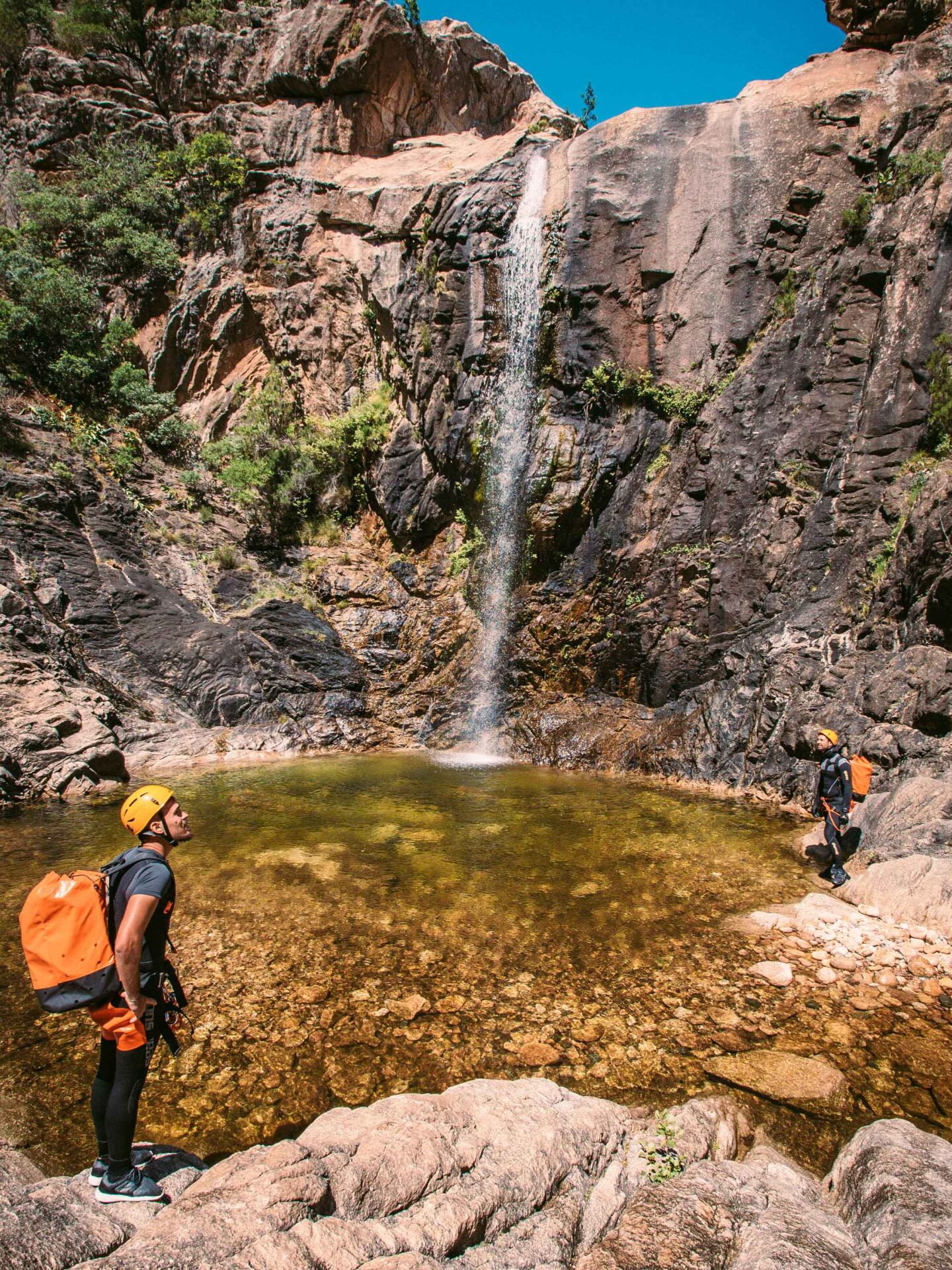
The granite bedrock of Monte Nieddu fractures into a tight gorge where water has carved a descent route that eliminates easier exits once you commit past the first major drop. Rio Pitrisconi difficoltà stems not from a single obstacle but from the cumulative demand: seven rappel stations, the longest requiring 25 meters of controlled descent on double rope, followed immediately by swim sections where the current pushes you toward undercut walls. The polished rock offers minimal friction when wet, and the canyon's orientation keeps most sections in shade even during summer, meaning water temperatures rarely exceed 14°C. Moderate canyoning experience translates to prior descents in similar environments where you have practiced self-rescue on rappel, can perform a safety knot mid-descent, and have swum in moving water wearing a wetsuit and harness. The technical grade assumes guided groups; solo or unsupervised attempts require advanced navigation and anchor-building skills. Physical fitness manifests in your ability to haul yourself onto ledges after deep-water sections, maintain core tension during traverses on slick rock, and sustain focus when cold and fatigued. Sardinian canyon conditions shift rapidly with rainfall upstream. A morning thunderstorm in the Monte Nieddu massif can triple flow rates within two hours, turning moderate jumps into dangerous hydraulics and raising water levels above safe exit points. Local guides monitor weather patterns and stream gauges; independent teams must check the Protezione Civile Sardegna bulletins and abort if rain is forecast within 24 hours of the descent window. The canyon difficulty rating reflects summer base-flow conditions between June and September. Spring runoff increases both water volume and the technical challenge, often pushing the route into the advanced category until late May. Autumn offers stable flows but shorter daylight, compressing the margin for delays. Groups that match the rio pitrisconi difficoltà guide with honest self-assessment complete the descent safely and find the exposure exhilarating rather than terrifying.
“The canyon's orientation keeps most sections in shade even during summer, meaning water temperatures rarely exceed 14°C.”
Rio Pitrisconi's canyon progression divides into three technical segments over 3–4 hours, requiring basic swimming ability and comfort with vertical descents. This itinerary outlines the physical demands and duration of each zone to help you gauge readiness.
Wade through the initial pool section (15–20 minutes), navigating smooth rock surfaces and waist-deep water. Expect moderate sun exposure during this warm-up phase.
Complete two rappels of 8–12 meters using fixed ropes, with brief rest intervals between descents. Upper body strength and rope confidence are essential here.
Slide down natural chutes and jump into pools 2–4 meters deep (30–40 minutes of active progression). Core stability helps control your descent angle.
Navigate tight passages requiring body positioning and short swims against gentle current (20 minutes). Claustrophobia or limited flexibility may challenge some participants.
Descend the 15-meter main waterfall rappel, then swim 50 meters through the exit basin. This segment tests sustained grip strength and swimming endurance.
Hike uphill on uneven terrain for 25–30 minutes to reach the starting point. Fatigue from the descent makes this return leg more demanding than the approach.
Rio Pitrisconi's difficulty stems from unpredictable water flow, technical rappels, and exposed terrain. Many visitors underestimate the physical demands or arrive unprepared for the canyon's specific hazards.
Assuming summer means low water levels
Check recent rainfall and local reports before departure—flash floods occur even in dry seasons and can trap groups in narrow sections.
Wearing hiking boots instead of technical footwear
Use closed-toe water shoes or canyoning boots with ankle support and drainage; standard hiking boots become waterlogged and lose traction on wet rock.
Skipping physical conditioning for rappels
Train upper body and core strength for sustained rope work—fatigue on multi-pitch descents increases injury risk and slows the group.
Ignoring the exit hike duration
Reserve energy for the steep 45-minute ascent after the canyon; most accidents happen during the exhausted climb out, not the descent.
Booking without verifying guide certification
Confirm your operator holds valid canyoning qualifications and liability insurance—unqualified guides cannot assess real-time hazards or manage emergencies.
Rio Pitrisconi canyoning demands specific safety gear and physical readiness to handle steep descents and water obstacles.
The period from late spring to early autumn offers the most stable conditions for canyoning in Rio Pitrisconi. Arriving during the best arrival window of 08:00–12:00 provides optimal lighting for navigation and avoids the most intense midday heat.
Mild temps 20-25°C, stable water flow
Water levels are ideal for technical maneuvers and rappelling. Trails are clear and weather risks are low.
Hot temps 30-35°C, low water flow
Heat requires early starts to manage physical exertion safely. Pools may have reduced volume due to seasonal dryness.
Cooler temps 18-24°C, occasional rainfall
Post-summer rains may increase water flow, requiring higher technical skill. Check local conditions for rainfall impact on safety.
—
Optimal lighting for photos and cooler temperatures for hiking before peak midday heat.
Verdict: The best window for manageable difficulty is May, June, or September during the 08:00–12:00 arrival slot.
The Rio Pitrisconi natural area is accessible daily throughout the year to accommodate visitors planning their canyoning descent.
Access to the natural area of Rio Pitrisconi is free of charge. Costs associated with canyoning activities are separate and dependent on professional guide services.
Verdict: Visitors pay 0 EUR to enter the area, with total costs for canyoning activities determined solely by the chosen professional guide service.
Everything you need to know about rio pitrisconi difficoltà
The overall rio pitrisconi difficoltà is generally considered moderate, suitable for active individuals with basic fitness. It features a series of natural pools and granite water slides carved by the mountain stream.
No, formal canyoning experience is not required to navigate the route successfully. Guides provide essential instructions on rappelling and water safety at the start of each excursion.
Participants should have good balance and the ability to traverse uneven, slippery granite terrain. Assessing your physical condition against the rio pitrisconi difficoltà ensures a more enjoyable and secure experience.
While there is no strict minimum age, children must be comfortable in water and able to follow complex safety instructions. Guided tours usually evaluate child participation based on their maturity and physical stature.
While the natural area is open to the public, canyoning requires specialized gear and local knowledge to navigate safely. Independent hikers should stick to marked trails rather than entering the watercourses.
Heavy rainfall can significantly increase the rio pitrisconi difficoltà by altering water flow and creating hazardous currents. Tours may be postponed during inclement weather to maintain visitor safety.
Those with a fear of heights may find some rappelling sections challenging during the adventure. Discussing your concerns with a guide in advance can help manage expectations regarding the vertical sections of the route.
Safety gear, including helmets, harnesses, and wetsuits, is provided by professional operators for all canyoning activities. This equipment is essential for protecting against the cold water temperatures and the abrasive granite rock surfaces.